Techniques / Field guide
Roasting Vegetables: Heat, Space and Time
Roasted vegetables should be browned and caramelized at the edges and tender inside. Pale, soggy results almost always come down to three things: heat, space and time.
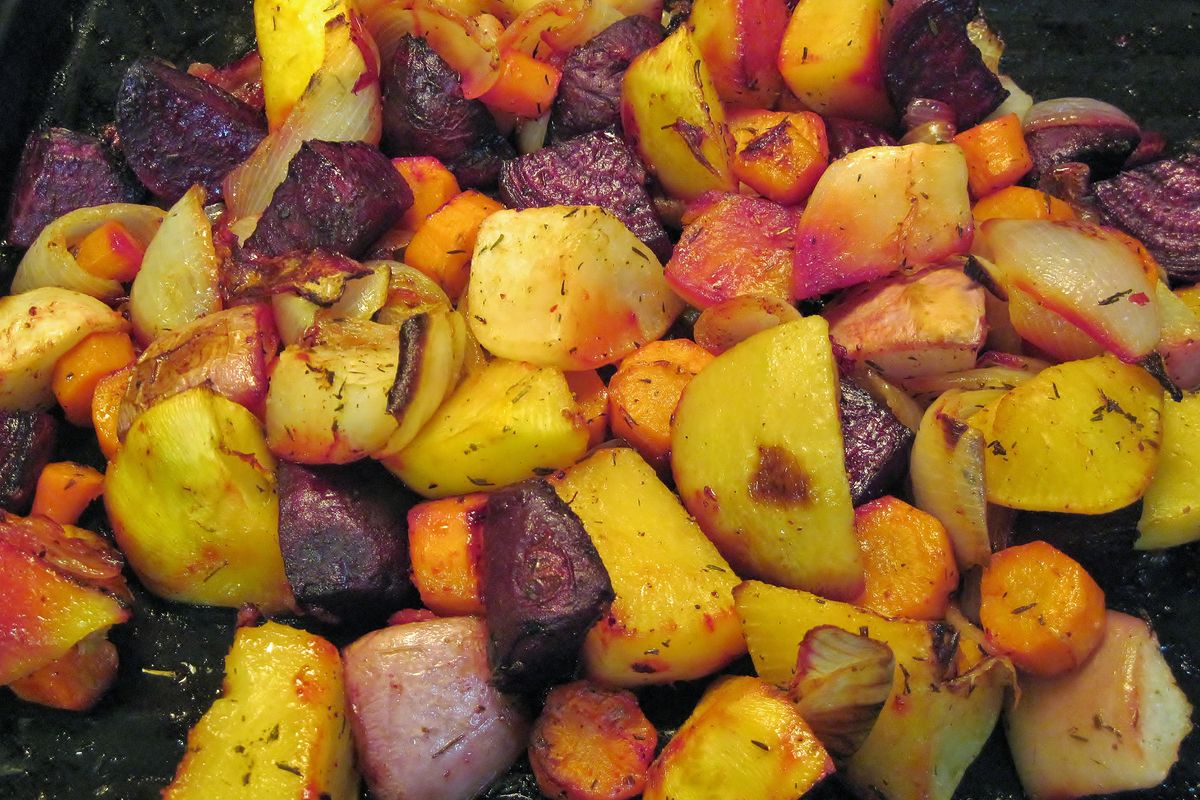
Photo: Neon root veggies (roasted beets, turnips, rutabaga, carrots by Gloria Cabada-Leman, CC BY 2.0, via Wikimedia Commons. Cropped and resized.
Heat: go higher than you think
Most vegetables roast best between 400 and 450°F (200 to 230°C). At those temperatures the surface dries quickly and browns through caramelization and the Maillard reaction, creating the sweet, nutty flavors that make roasted vegetables irresistible. At lower temperatures they soften before they brown. Heat the oven fully before the pan goes in, and roast on a rack in the upper or middle third.
Space: do not crowd the pan
Vegetables release moisture as they cook. If they are piled on top of each other, that moisture is trapped and they steam. Spread them in a single layer with a little space between pieces, and use two sheet pans if you need to. A heavy, rimmed, light-colored aluminum sheet pan browns evenly without burning.
Cut evenly
Pieces of similar size cook at the same rate. Cut dense vegetables like carrots and potatoes smaller than tender ones like zucchini, or start dense vegetables earlier and add softer ones partway through. Cutting with plenty of flat surfaces increases the area in contact with the hot pan, which means more browning.
Oil and salt
Toss vegetables in a bowl with enough oil to coat them lightly, usually about 1 tablespoon per pound, and season with salt and pepper. Too little oil and they dry out; too much and they turn greasy. Olive oil works for most vegetables; a neutral oil with a higher smoke point is useful above 450°F.
Timing guide at 425°F
- Asparagus, green beans, cherry tomatoes: 10 to 15 minutes
- Broccoli and cauliflower florets, zucchini, peppers: 18 to 25 minutes
- Brussels sprouts (halved), delicata squash, onions: 20 to 30 minutes
- Carrots, parsnips, beets, potatoes (1-inch pieces): 30 to 45 minutes
- Butternut squash (1-inch cubes), sweet potatoes: 30 to 40 minutes
Flip or stir once halfway through. Vegetables are done when they are tender when pierced and browned on several sides.
Finishing touches
- A squeeze of lemon or a splash of vinegar right out of the oven
- Fresh herbs: parsley, dill, mint, cilantro or chives
- Something crunchy: toasted nuts, seeds or breadcrumbs
- Something creamy: yogurt sauce, tahini, crumbled feta or shaved Parmesan
- Brown butter and crisp sage, as in our Brown Butter Delicata Squash
Make a big batch
Roasted vegetables keep for up to four days in the fridge. Toss them into grain bowls, fold them into frittatas, blend them into soups or pile them onto toast. Reheat in a hot oven or skillet rather than the microwave to keep their texture.
General cooking information only. Follow food-safety guidance for your area and the instructions for your equipment.