Techniques / Field guide
A Seasonal Produce Calendar for US Home Cooks
Cooking with the seasons is the simplest way to make food taste better. Here is a general guide to what is usually at its best in much of the United States, along with a few ideas from our recipe archive.
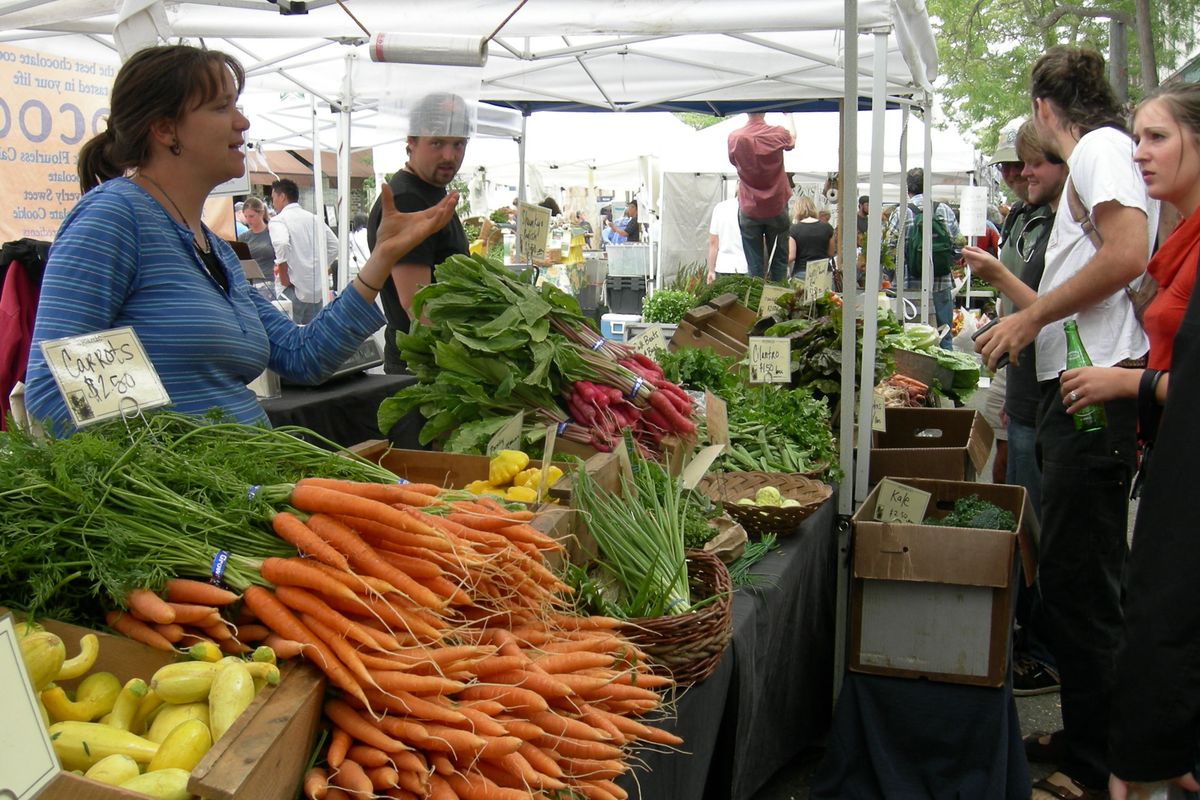
Photo: Ballard Farmers' Market - vegetables by Joe Mabel, CC BY-SA 3.0, via Wikimedia Commons. Cropped and resized.
Why cook seasonally?
Fruits and vegetables picked at their peak and sold close to home often taste noticeably better than those harvested early and shipped long distances. In-season produce is frequently more affordable, too. Seasonal eating also adds natural variety to the year: the first asparagus of spring, the tomatoes of August, the squash of October.
Seasons vary a great deal across the country. California and the South have longer growing seasons than New England or the upper Midwest. Use this as a starting point, and let your local farmers market be the final word.
Spring (March to May)
- Asparagus, peas, fava beans and sugar snap peas
- Spring onions, scallions, ramps and leeks
- Radishes, baby lettuces, spinach and arugula
- Rhubarb and the first strawberries
- Fresh herbs: chives, mint, parsley, dill
Try Lemon Asparagus Risotto, Crisp Chicken Thighs with Spring Peas, or Strawberry Rhubarb Crisp.
Summer (June to August)
- Tomatoes, cucumbers, bell peppers and chiles
- Sweet corn, zucchini, summer squash and eggplant
- Green beans, okra and fresh herbs like basil
- Berries, cherries, peaches, plums, melons
Try Tomato Bread Panzanella, Chilled Tomato Gazpacho, Grilled Corn with Chili-Lime Butter or Blueberry Buttermilk Snacking Cake.
Autumn (September to November)
- Winter squash: delicata, butternut, acorn, kabocha and pumpkin
- Apples, pears, grapes and cranberries
- Brussels sprouts, cauliflower, broccoli, kale and chard
- Sweet potatoes, onions, mushrooms and fennel
Try Brown Butter Delicata Squash, French Onion Soup or Seared Pork Chops with Cider Pan Sauce.
Winter (December to February)
- Root vegetables: carrots, parsnips, turnips, beets, celery root
- Cabbage, kale, collards and other hardy greens
- Potatoes, onions, garlic and stored squash
- Citrus: oranges, grapefruit, lemons, clementines
Try Winter Minestrone, Lamb Shepherd's Pie or Spatchcocked Chicken with Root Vegetables.
Shopping tips
- Visit the market early for the best selection, or late for the best deals
- Ask growers what is best this week and how they like to cook it
- Buy what looks freshest and plan meals around it, not the other way round
- Freeze or preserve surplus: blanch and freeze corn and peas, make jam, roast and freeze tomatoes
General cooking information only. Follow food-safety guidance for your area and the instructions for your equipment.